09/22/2020
By DocDragon
from university place, WA
profession Dentist
with PA Dental
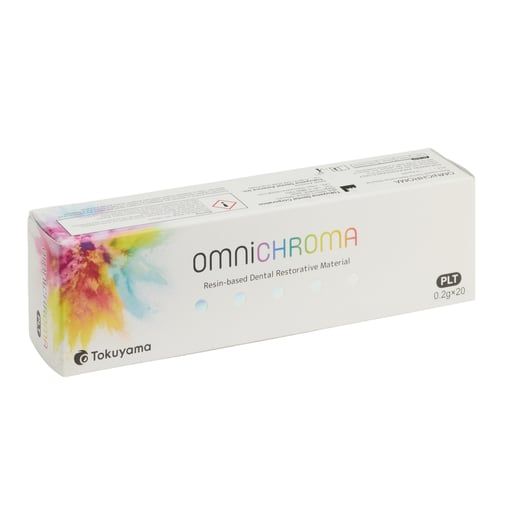
My personal take on Omnichroma: * Pros: + Pretty good shade matching ability of the material, less need for extensive composite inventory. + Excellent marginal adaptation, "flows" to the margins more or less on its own especially if you have a second, moist layer of bonding (i.e. uncured) and "pad" the composite a little towards the margins. + Great choice for smaller class V fillings. * Cons: - Very sticky compared to Filtek Supreme Ultra or even Admira Fusion x-tra (also a "universal" composite). Wetting your instrument tip with a piece of alcohol gauze or a thin layer of bond on your tip will help. - Because of its low viscosity, it slumps and does not retain any anatomical sculpturing for more than 3 seconds. I even tried to use the material fresh out of the fridge to no avail. So if you like primary and secondary grooves in your fillings like me, this is not the composite for you. - Not very suitable for large class V or class IV fillings because of its low viscosity due to slumping. - Color match is generally good, but fillings are not necessarily "invisible" as the advertisement is trying to make you believe. The shade is often slightly lighter than the tooth (if you are picky). Monochromatic teeth have a better chance of being matched than those that are polychromatic, although you might think it should be the opposite due to Omnichroma's chameleon effect. Bottom line: Not a bad material, but as usual you need to know the material's strengths and weaknesses. As an alternative, try VOCO's Admira Fusion x-tra. It's certainly firmer, not as "runny," has good shade matching as well, and better "sculptureability" (is that a word?). Filtek Supreme Ultra is still the composite of choice for me if you want to be creative with your restoration.

